Mobility is no longer confined to the movement of people and vehicles. It plays a central role in driving economic growth, ensuring public safety, improving quality of life and supporting sustainable urban development. In an increasingly urbanised environment, the way mobility systems are planned and managed has a direct bearing on the future of cities and communities.
In cities such as Hyderabad, traffic congestion continues to pose a significant challenge. On average, commuters spend two to three hours each day in traffic, leading to a considerable loss of time and productivity. Recognising this impact, the Government of Telangana has adopted a more integrated approach, viewing mobility as a convergence of technology, safety, environmental sustainability and citizen-centric services, rather than as a standalone function.
A key priority has been the digital transformation of transport services. The adoption of national platforms such as Sarathi and Vahan has enabled the streamlining of vehicle registration and licensing processes. The focus is on minimising physical interface, enhancing transparency and ensuring that services are delivered efficiently to citizens, increasingly through faceless and online systems.
Strengthening enforcement through technology has also been a major area of intervention. The deployment of automated systems, including speed cameras and automatic number plate recognition, is aimed at improving compliance and road safety. With approximately 7,000 fatalities and 25,000 road accidents reported annually in the state, there is a clear and urgent need to adopt more effective enforcement mechanisms.
The Government is further advancing a comprehensive road safety framework based on the principles of Enforcement, Engineering, Education and Emergency response. Partnerships with institutions such as IIT Madras are supporting road safety audits and infrastructure improvements. At the same time, efforts are being made to strengthen emergency response systems in coordination with the health sector to reduce fatalities and improve post-accident care.
Sustainable mobility remains a key focus area. Telangana has introduced policy measures, including exemptions on road tax and registration fees for electric vehicles, which have contributed to a steady rise in their adoption. Parallel efforts are underway to develop charging infrastructure and support the broader electric mobility ecosystem.
Looking ahead, the vision is to position Telangana as a leader in smart, safe and sustainable mobility. This vision is anchored in three core principles: technology-driven governance, citizen-centric service delivery, and a strong emphasis on safety and sustainability. Through coordinated planning and interdepartmental collaboration, the state is working towards building a mobility ecosystem that is efficient, transparent and future-ready
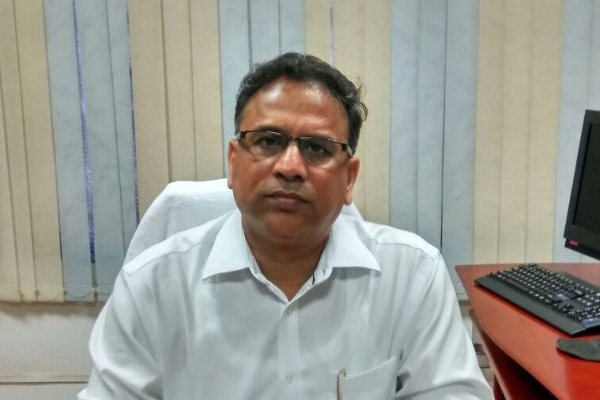
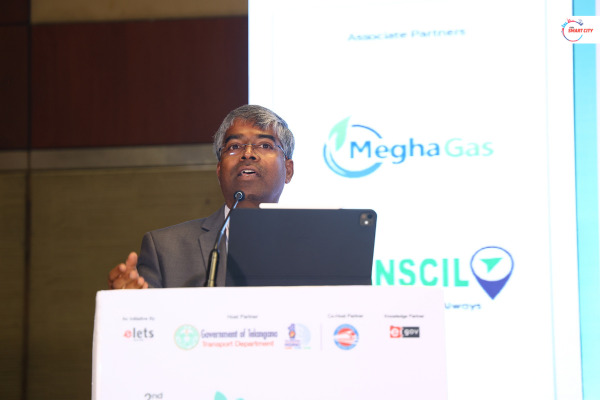
Insights shared by: Dr. K. Ilambarithi, Transport Commissioner, Government of Telangana at the recently concluded 2nd Elets National Mobility Summit on March 17, 2026 in Hyderabad