

NEW DELHI — Union Road Transport and Highways Minister Nitin Gadkari has proposed that officials not issue speeding challans to motorists who exceed expressway limits by up to 20%, he said Oct. 27 at a Confederation of Indian Industry conference on highways.
READ MORE: Telangana’s Strategic Transition to a Smart, Safe & Sustainable Mobility Ecosystem

Under a 2018 central notification, the maximum speed for passenger cars with eight or fewer seats is 120 kmph on expressways with access control. A 20% margin would allow drivers to reach 144 kmph before a challan is issued, Gadkari said. Speeds above that threshold should be fined, he said.
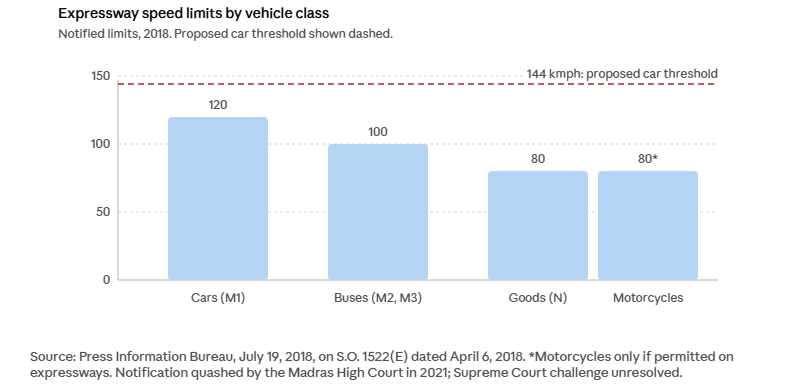
Motorists must still follow posted speed signs, and the margin does not change the limit that applies to a road. In 2021, the Madras High Court quashed it and ordered the government to reconsider. The Road Transport Ministry challenged that order in the Supreme Court.
The margin would not apply uniformly. Under the same 2018 notification, buses are limited to 100 kmph on expressways and goods vehicles to 80 kmph. Some reports describe expressways with lower posted limits, and in those cases the margin would be calculated from the lower limit.
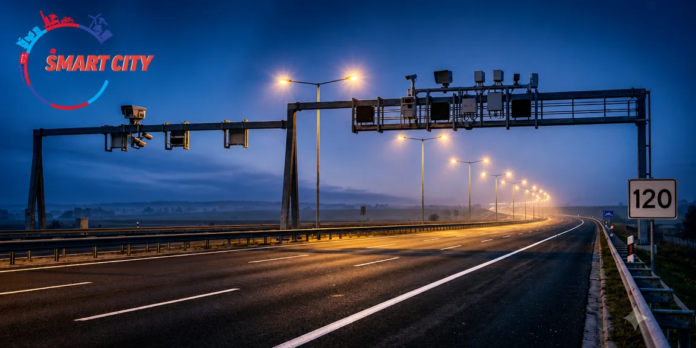
Gadkari also said the government plans to use artificial intelligence-based traffic systems to detect lane violations and unsafe driving. A Rajya Sabha reply, as reported by Swarajyamag, describes a phased rollout of Advanced Traffic Management Systems across about 52,647 kilometres of national highways and expressways. Some corridors already have AI-based detection systems.
Gadkari also warned contractors and consultants responsible for poor-quality highway work that they could face blacklisting, bans and financial penalties.