In July 2021, Puri—a city of nearly 300,000 residents and 20 million annual tourists—became the first city in India to implement a city-wide, 24×7 potable water supply straight from household taps. The milestone marked a turning point for Odisha, a coastal state in eastern India that had long struggled with infrastructure deficits, intermittent water service, and high contamination risks.
Prior to 2016, only 40 per cent of Odisha’s urban population had access to formal drinking water systems, and merely 30 per cent of households possessed piped connections. Water supply was generally limited to two to four hours per day under low pressure, while informal settlements were disproportionately excluded. This deficit led to widespread unauthorized connections, reliance on unsafe alternatives, and widespread public distrust.
The Universal ‘Drink from Tap’ Approach
In 2019, the Government of Odisha launched the Drink from Tap (DFT) Mission, shifting the focus of urban water management from asset creation to guaranteed service quality. Built on the core principle of universal access before service enhancement, the state adopted a “leave no one behind” approach. The policy focused on establishing complete household connectivity, specifically including informal settlements and low-income communities.
The initiative aims to deliver continuous, pressurized, and safe drinking water conforming to IS 10500 quality standards directly to household taps. Under this framework, residents no longer need to boil municipal water, buy bottled alternatives, or install domestic filtration systems. Following the pilot in Puri, Odisha expanded Drink from Tap systems to 29 cities, with 11 cities fully operational under 24×7 frameworks.
Women-Led Governance: The Jal Sathi Model
To connect utilities with local communities, Odisha introduced the Jal Sathi model, a women-led partnership framework. Under this initiative, women from Self-Help Groups (SHGs) are trained as Jal Sathis to serve as localized service facilitators within their neighborhoods. Operating under a performance-linked incentive structure, they act as the primary interface between water utilities and consumers.
The responsibilities of Jal Sathis extend well beyond public awareness campaigns. They assist with new water connections, regularize unauthorized users, conduct meter readings, assist in billing and collection, perform field-level water quality testing, and educate citizens on water conservation and hygiene.
Multi-Layered Quality Assurance
To ensure municipal tap water meets IS 10500 safety standards, Odisha established central and regional testing laboratories alongside a dedicated Water Quality Assurance Cell (WQAC). For financial year 2025–26, utility provider WATCO signed a Memorandum of Understanding with IIT Bhubaneswar to enhance monitoring, testing, training, emergency management, and certification systems.
In collaboration with the National Informatics Centre (NIC), WATCO developed the “Jala Mana” mobile application, which enables real-time uploading of water quality test results from public outlets and consumer doorsteps. The state also deployed IoT-enabled real-time monitoring systems to track flow, pressure, and residual chlorine levels across distribution networks, supported by automated chlorine dosing systems and Lab-on-Wheels units.
Utility Efficiency and Smart Infrastructure
Odisha has established dedicated Non-Revenue Water (NRW) Cells across its cities and redesigned household connections using leak-proof saddle and compression fittings installed by empanelled plumbers. Centralized command-and-control systems monitor real-time flow and pressure data across District Metering Areas (DMAs) and sub-DMAs, collecting operational data at five-second intervals.
These measures have reduced Non-Revenue Water to below 15 per cent in Drink from Tap cities, while revenue collection efficiency now exceeds 90 per cent. The state is also deploying 50,000 smart meters across five pilot cities to improve demand management. These real-time intelligence networks are establishing the foundation for AI-enabled operational intelligence, predictive maintenance, and system optimization across Odisha’s urban water sector.
Views Expressed by:
- Chinmaya Tripathy, Chief Executive Officer, Ecometrix and Authority Engineer, Water Corporation of Odisha (WATCO)
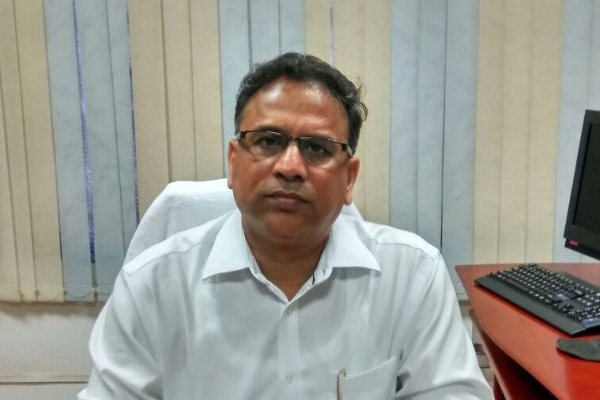
- Er. Debabrata Mohanthy, Managing Director, Water Corporation of Odisha (WATCO)