

India’s infrastructure story is one where ambition often faces frustration. A new survey from Deloitte, The Future of Infrastructure 2026, puts data behind what industry insiders have long argued: the barriers are not only financial. They are structural, regulatory, and organisational.
Among Indian respondents, 38% identified the lack of private sector participation as a major obstacle to delivering infrastructure projects. Critically, the challenge extends beyond raising capital. The more profound problem is inviting investors in the first place and keeping them engaged long enough to reach financial closure. A further 42% cited complex policies, regulations, and approval processes as barriers to project delivery, while 38% pointed to budget constraints.

READ MORE: Lucknow Development Authority’s Planned Urban Expansion
Taken together, these three findings describe a system that is not broken but is friction-heavy at precisely the moments that determine whether a project moves forward or stalls.
That story is not exceptional. It is representative.
India’s Hybrid Annuity Model (HAM)
HAM offers one tested answer. Under HAM, the government funds 40% of construction costs upfront, cutting private partners’ capital exposure during the highest-risk phase. Returns come through annuity payments over the operations period, linked to performance rather than to traffic projections that may fail to materialise. The model has demonstrably improved the bankability of road projects by giving investors a government-backed risk floor.
READ MORE: Beyond Pipes and Pumps: The Rise of AI-Driven Water Governance in India
The Deloitte data suggests that the appetite for this kind of structured risk-sharing extends well beyond roads. 71% of respondents expect growth in vendor and supplier financing. 62% foresee increased participation from multilateral and development banks. 58% anticipate higher involvement from sovereign wealth funds and pension funds. These are patient, long-horizon investors. They do not need guaranteed returns. They need clear revenue models, bankable structures, and a regulatory environment that does not arbitrarily shift terms mid-project.
Better project preparation, cleaner revenue models, and financing structures that distribute risk intelligently among stakeholders are not aspirational goals. They are the specific conditions these investor classes require before committing capital at scale.
Technology Should Pave the Way
The survey’s technology data deserves its attention. 71% of Indian respondents believe the public sector must modernise infrastructure with digital engineering technologies, a figure nearly double the Asia Pacific average of 36%. That gap is significant. It suggests Indian infrastructure leaders are not waiting for the sector to mature elsewhere before demanding digital tools at home.
More striking still: 91% expect generative AI, digital twins, and predictive analytics to significantly improve infrastructure and transportation operations. 79% are already developing AI training programmes. 62% have begun building AI implementation roadmaps.
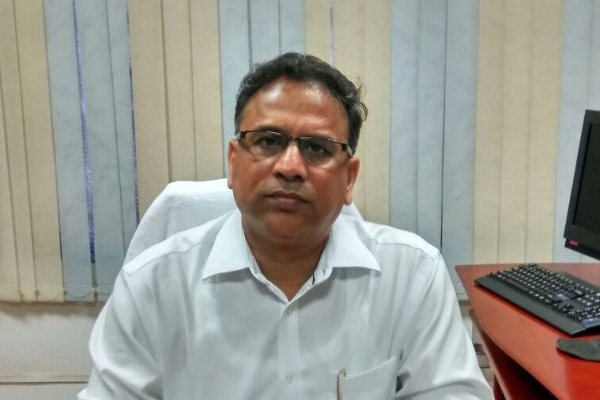
NSN Murty, Government and Public Services Consulting Leader at Deloitte South Asia, framed it plainly: Indian leaders now view AI not as a future aspiration but as an operating layer for infrastructure planning, financing, and operations.
READ MORE: BWSSB Powering the AI-Driven Future of Water Management
Cybersecurity (93%), freight rail and mass transit (82%), public Wi-Fi (80%), and alternative energy (77%) top the list of areas where increased investment is anticipated. These are not isolated bets. They describe a connected infrastructure ecosystem where digital and physical assets are expected to work together.
The Productivity Tension
A sector where 91% of leaders believe AI will transform operations but where 42% still navigate approval bottlenecks shows that the technology is outpacing governance. That gap will not close on its own. It closes through smarter project preparation, regulatory rationalisation, and financing models that reflect how institutional capital actually behaves. NHAI’s 2018 retreat was eventually reversed through structural fixes, including HAM itself. The question is how many project cycles India loses before governance catches up with the ambition.
Sources:
- Why new road orders have slowed down (Bloomberg Quint, December 2017)
- Deloitte, Future of Infrastructure Survey 2026, via ANI, October 5, 2026