For generations, farmers standing along the boundaries of their fields have dreamt of a better future for their children: quality education, better employment opportunities and a secure life. Over time, the aspiration for planned urban expansion, better housing for citizens and protection of farmers’ interests has begun taking concrete shape.
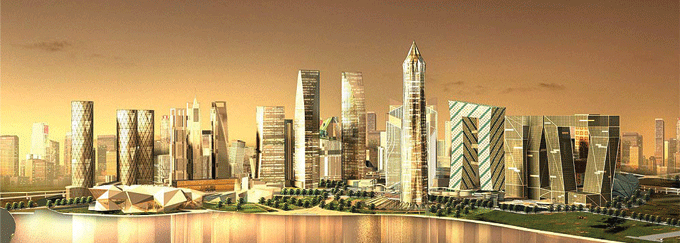
With this vision, the Lucknow Development Authority (LDA) has adopted a development model through its land pooling scheme to facilitate planned expansion in the northern and southern parts of the city. Two ambitious projects, Naimish Nagar and Varun Vihar, are being developed as part of this approach. Their foundation is not merely the construction of buildings, but a comprehensive model of urban development in which citizen amenities, employment, industry, environmental considerations and modern lifestyles develop together.
A significant example of this approach is the development of Naimish Nagar, spread across approximately 4,100 acres, and Varun Vihar, being developed across approximately 6,580 acres. The payment for land purchased from farmers for these projects was transferred directly into their bank accounts, without intermediaries or unnecessary delays. This represents not merely a transaction, but an example of transparency, trust and good governance.
Naimish Nagar
Naimish Nagar is being developed as a new centre for the planned expansion of Lucknow. With its connection to spirituality, meditation centres, wellness and cultural centres, world-class road networks, modern sewerage and water-supply systems, underground electricity networks, expansive green parks, community facilities, educational institutions and healthcare services, the development is intended to provide residents with a high quality of life.
Improved connectivity will link the area seamlessly with major institutions and commercial areas of the city, reducing travel time and improving accessibility. It is also expected to provide a boost to tourism.
Varun Vihar
Being developed as one of the city’s largest residential projects, Varun Vihar has the potential to become a new engine of future economic growth. Modern logistics facilities, commercial activities, industrial opportunities, large green areas, a central park, water bodies, improved connectivity to expressways and world-class urban infrastructure are expected to make the project attractive to investors, entrepreneurs and citizens alike.
The arrival of industries can create significant employment opportunities, enabling local youth to find better prospects within their own city.
At a time when the country is moving rapidly towards planned urbanisation, Lucknow is also defining a new urban identity. Projects such as Naimish Nagar and Varun Vihar are being conceived not simply as residential colonies, but as comprehensive models of modern urban living. While Naimish Nagar is intended to demonstrate a modern, organised and balanced urban environment, Varun Vihar, given its extensive area, is expected to emerge as an important centre for industrial, commercial and logistics activities.
IT City and Wellness City
Another significant example of LDA’s approach is the approximately 3,490-acre IT City and the approximately 1,200-acre Wellness City.
For both projects, the Lucknow Development Authority has adopted a participatory development model instead of the conventional land acquisition approach. Land has been taken from landowners without imposing an economic burden on them, developed in a planned manner and returned to them in the form of developed plots.
This model is not merely a mechanism for reorganising land. Land that was previously limited to agricultural use can be transformed into more valuable developed property equipped with roads, electricity, water supply, sewerage, green areas and other urban amenities, providing landowners with greater opportunities for economic benefit in the future.
IT City: Building Lucknow’s Digital Economy
IT City is being developed as a foundation for the digital Uttar Pradesh of the future. The project is intended to create a conducive environment for information technology, startups, innovation, corporate offices and knowledge-based industries.
The development is expected to generate high-quality employment and strengthen Lucknow’s position as one of the country’s important technology centres.
Wellness City: Building a Health and Medical Ecosystem
The Wellness City project is intended to create new opportunities in healthcare, medicine, research and comprehensive care for senior citizens.
Modern hospitals, medical institutions, wellness centres, research facilities and a wider healthcare ecosystem can provide citizens with improved healthcare services while also giving a boost to medical tourism and health-related industries.
Development Centred on Citizens
The greatest beneficiaries of these projects will be ordinary citizens. Families will have access to safe, organised and modern residential environments, supported by better road connectivity, public transport, educational institutions, healthcare facilities, parks, sports complexes, commercial centres and digital services.
Planned urban expansion will also help control unplanned development, traffic pressure and the growing burden on basic infrastructure.
Connectivity will be one of the strongest foundations of these developments. Better links with major national and state highways, expressways, the Ring Road, Kisan Path and other important transport networks will open new possibilities for citizens, industries and investors.
The benefits of improved mobility will extend beyond the city, strengthening the economic and social linkages of surrounding rural areas as well.
The approach adopted by the Lucknow Development Authority demonstrates that modern cities are not built merely through concrete structures. They are built through trust, transparency, participation and forward-looking planning.
Timely payments to farmers, developed plots for landowners, a conducive environment for industry, employment opportunities for young people, better living conditions for citizens and a well-planned city for future generations together define the development model towards which Lucknow is moving with confidence.
This is about building a future in which farmers receive their rightful compensation with dignity and on time, young people see new employment opportunities, industries find a supportive environment for investment, and families have access to safe and modern housing. When these elements come together, it is not merely a city that changes; its entire future begins to change. This trust is becoming one of the strongest foundations for taking Lucknow towards new heights.
——————————————————-
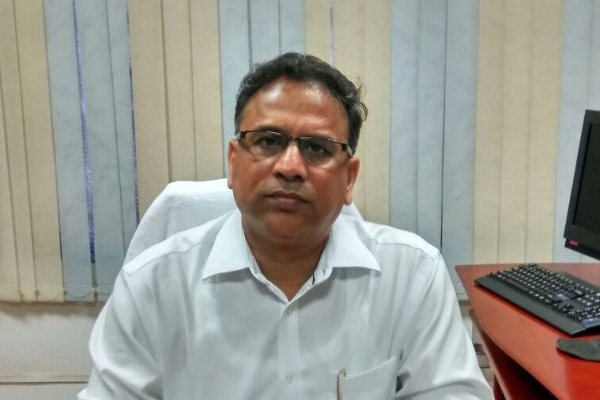
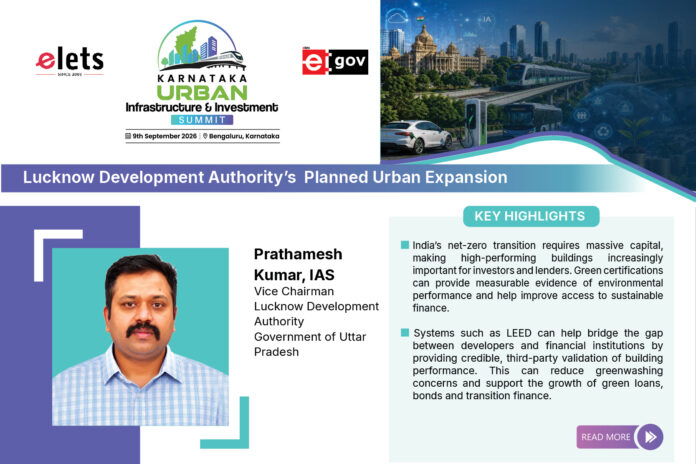
Insights shared by: Prathamesh Kumar, IAS , Vice Chairman, Lucknow Development Authority, Government of Uttar Pradesh