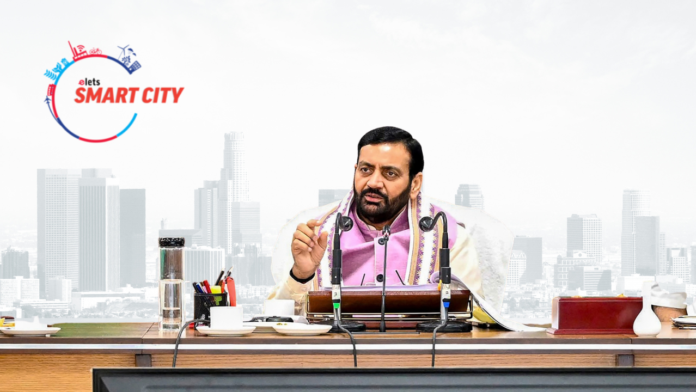
Haryana CM Nayab Singh Saini (ANI, 4 Oct 2026) is on a three-day visit to Singapore from 4 to 6 October 2026 to engage with leading global cities, capture moments with local leaders, formalise agreements, return with presentations, and unveil ambitious initiatives. Things get bogged down in implementation, budgets balloon, timelines slip, and local politics, contractor limitations, and changing priorities water down the original vision.
Consider one such precedent: in 2015, Bangalore’s civic body studied Copenhagen’s cycle infrastructure and public transport integration. The official delegation returned with a detailed report recommending similar systems. Eight years later, Bangalore’s cycling infrastructure is minimal, and metro integration remains fragmented. Another relevant example is the 2016 tour of Barcelona by Delhi officials for smart traffic management. The city implemented scattered IoT sensors but never achieved Barcelona’s integrated approach.
Why? Because study tours capture a city at a specific moment, in a specific context, without revealing the 20 years of political continuity, funding stability, and bureaucratic trust that made that city work. Singapore’s infrastructure didn’t emerge from a study tour; it emerged from consistent policy over decades under stable governance. India’s officials tour the destination, not the journey.
What the Haryana delegation should avoid is marvelling at world-class convention centres, integrated transport, efficient service delivery, and clean systems. What they might not see is the 40-year investment cycle, the political continuity, and the pre-existing wealth that made those systems possible. Gurugram faces real constraints that Singapore does not, including rapid, unplanned population growth, fragmented municipal governance, competing state and central priorities, budget pressures, and contractor reliability issues. A convention centre based on Singapore’s blueprint will still face these constraints.
Also Read: Union Minister G. Kishan Reddy gears up for Gandhi Jayanti: Swachhata Hi Seva.
The study isn’t wrong; the assumption that tourism equals implementation is the problem. What matters isn’t what Gurugram learns in Singapore, but what it does with those lessons back home. It works in pockets but has never achieved integrated city-wide efficiency. These weren’t failures of vision; they were failures of implementation. Each city had a different political timeline, budget reality, and bureaucratic capacity than its inspiration.
Haryana’s tour matters only if officials return asking, “What’s different about Gurugram’s context? How do we adapt Singapore’s model to our constraints, not just copy the outcome?” Otherwise, it’s expensive tourism, not strategy.