

NEW DELHI — India recorded more than 1.5 crore (15 million) domestic air passengers in a single month, Civil Aviation Minister Ram Mohan Naidu said Tuesday.
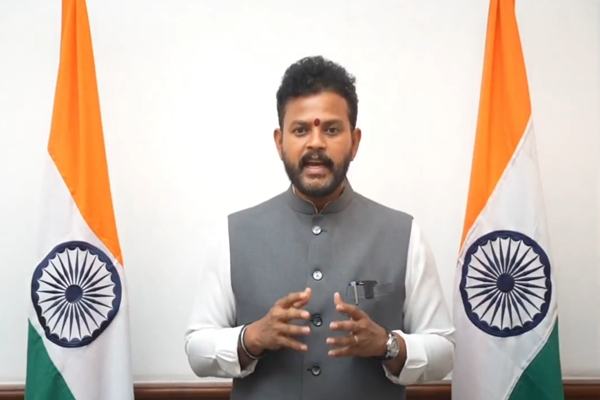
Naidu made the remarks in a video message shared on social media. He spoke on the International Day of the Air Traffic Controller, sending greetings to air traffic control personnel gathered in Chennai.

Naidu said the country sees more than 5,000 domestic and more than 1,000 international aircraft movements every day. He said India aims to grow its annual passenger traffic from 24 crore (240 million) to 130 crore (1.3 billion) by 2047, a goal that would place heavy demands on the country’s airports and control systems.
Naidu said technology cannot guarantee safety on its own. “It can assist, but judgment, composure and responsibility will always be human,” he said. He told the controllers that their work depends on the same qualities that have always defined the profession.
He said the Airports Authority of India has set aside 3,490 crore rupees to modernize infrastructure. Of that amount, 1,532 crore rupees is earmarked for automating the air traffic management system. The investment is meant to help controllers handle a growing number of flights without compromising safety, officials have said in earlier statements on the program.
Naidu said air traffic controllers will play a central role as the sector expands. Managing growing air traffic, he said, will require safe and efficient aircraft movement and a stronger foundation for what he called a safer, smarter and more connected aviation future.
The ministry has not released a breakdown of the monthly passenger figure in the statement reported by News On AIR, the state broadcaster’s news service. The figure reflects domestic traffic only, and the minister did not specify which month it covered.
Air travel in India has expanded quickly in recent years as new airports open and low-cost carriers add routes to smaller cities. Growth of this scale puts pressure on the workforce that guides aircraft through crowded skies, making the role of controllers increasingly visible to the public.