
By combining major capacity expansion, aggressive wastewater reuse, and digital monitoring, the Bangalore Water Supply and Sewerage Board is establishing a circular urban water ecosystem for nearly 14 million residents.
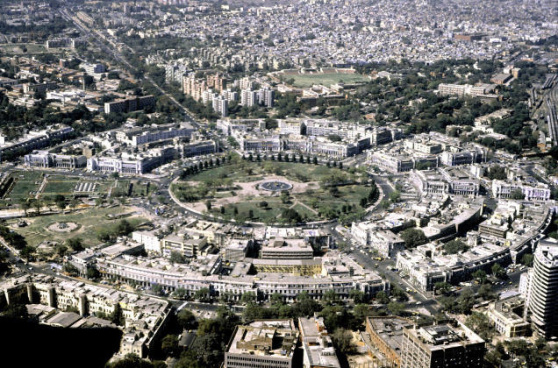
Serving nearly 14 million residents across approximately 800 square kilometres of the Greater Bengaluru region, the Bangalore Water Supply and Sewerage Board (BWSSB) manages an infrastructure footprint that includes over 14,384 kilometres of water supply pipelines, nearly 12,000 kilometres of sewer networks, and 11.46 lakh household connections. Beneath the city’s global reputation as India’s technology capital, rapid urbanisation, industrial expansion, and climate variability have placed immense pressure on its water systems.

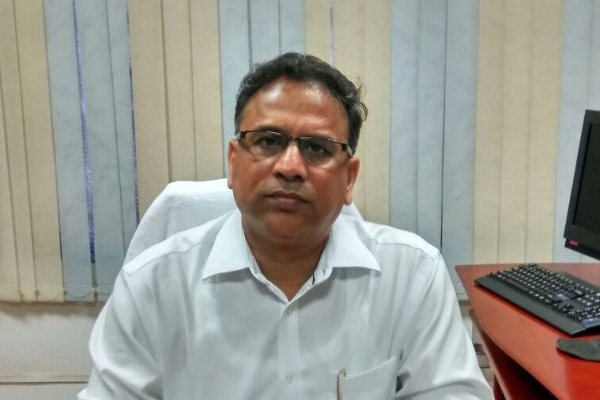
To address these challenges, BWSSB is moving away from traditional linear supply models toward an integrated framework combining augmentation, wastewater reuse, groundwater recharge, digital operations, conservation, and public participation. “Water security for a metropolitan city like Bengaluru must be anchored on two equally strong and interdependent pillars: supply-side augmentation and demand-side management,” says Dr. Ram Prasath Manohar, IAS, Chairman of BWSSB. “These two dimensions must function in synchrony to ensure long-term resilience.”
Building Capacity for a Growing Metropolis
The Cauvery River remains the cornerstone of Bengaluru’s water supply. BWSSB currently operates six major Water Treatment Plants with a combined installed treatment capacity of 2,293 MLD, delivering nearly 150 litres per capita per day across the metropolitan region.
A major milestone was achieved in October 2024 with the commissioning of the Cauvery Water Supply Scheme (CWSS) Stage V project. Supported by the Japan International Cooperation Agency (JICA), the project added 775 MLD of treatment capacity. To stay ahead of demographic and economic expansion, BWSSB is already planning CWSS Stage VI, which is expected to add another 500 MLD.
However, utility leadership acknowledges that reliance on external freshwater transfers is not indefinitely sustainable. Consequently, wastewater reuse has become central to the city’s long-term strategy.
Turning Wastewater into a Strategic Resource
Bengaluru operates 34 Sewage Treatment Plants (STPs) with a combined installed capacity of 1,348.50 MLD. Rather than allowing treated effluent to go underutilised, BWSSB reuses nearly 825 MLD for environmental applications and 30 MLD for commercial use, reserving potable supplies for drinking and domestic needs.
Treated wastewater is also being deployed for large-scale hydrological restoration. BWSSB has rejuvenated 274 lakes, including 140 in Kolar, 65 in Chikkaballapura, and 69 in Anekal.
These interventions have yielded measurable hydrological benefits. Independent studies conducted by the Indian Institute of Science (IISc) in 2023 recorded groundwater level improvements between 58 and 73 per cent in rejuvenated zones, transforming local lakes into active recharge assets and climate buffers.
Demand Management Moves to the Forefront
Alongside supply augmentation, BWSSB has prioritized demand-side conservation. The utility mandated the installation of tap aerators across connection networks, completing nearly 12 lakh installations toward a target of 20 lakh. Together with operational efficiency measures, these efforts saved nearly 200 million litres per day during peak stress periods.
Groundwater recharge is being expanded through the construction of rainwater recharge pits near borewells. BWSSB has completed approximately 1,000 pits and plans to construct an additional 1,000 to bolster local aquifer levels.
Digitising the Urban Water Utility
Operational management has been upgraded through the CP-24 Phase 3 centralised SCADA system—one of Asia’s largest command-and-control centres for water utilities—enabling real-time monitoring of the supply and sewerage network. This is complemented by a fully mapped Geographic Information System (GIS) covering pipelines and treatment assets for predictive maintenance.
Digital oversight has significantly curtailed Non-Revenue Water (NRW) lost to leaks, theft, and metering errors. Through AI-enabled monitoring, bulk flow metering, and targeted repairs, BWSSB reduced NRW from 51 per cent in 2013 to 26.5 per cent in 2025, recovering nearly 200 MLD of water daily.
“Reducing Non-Revenue Water has been a central operational priority for BWSSB, as it directly impacts water security, financial sustainability, and service reliability,” the utility states. “The transition from a linear ‘source-to-disposal’ framework to a circular, digital, climate-resilient, and citizen-driven system represents a structural transformation in urban water governance.”
Physical upgrades have accompanied these digital controls, including the replacement of 200 kilometres of ageing cast-iron pipelines out of 3,000 kilometres identified for replacement, along with the installation of 56 bulk flow meters across District Metered Areas.
Citizen-Centric Digital Services
BWSSB has launched several digital platforms to streamline public interactions. New connections are tracked via the Jaladhare portal, while the Sajala platform now processes more than 60 per cent of utility billing collections digitally.
For specialized services, the utility launched Sanchari Kaveri, an IoT-enabled smart water tanker management system utilising RFID and GPS tracking. Additional platforms include Parisara Jalasnehi for booking treated wastewater and Antharjala for processing borewell permissions.
Climate Resilience Becomes Central
In response to severe water stress in 2024, BWSSB instituted the Panchasutra framework—a five-point action strategy focused on wastewater reuse, borewell monitoring, rainwater harvesting, water-efficient fixtures, and public engagement.
To support future demand, the utility plans to expand its total wastewater treatment capacity from 1,348.50 MLD to 2,511.50 MLD across 79 existing, ongoing, and proposed STPs. Biogas recovery at treatment facilities currently generates approximately 4.5 MW/hour of electricity, lowering operating costs and carbon emissions.
Innovation efforts also include the Advanced Water Treatment Plant at Jakkur, where tertiary-treated wastewater is blended with lake water to produce potable-quality water meeting World Health Organization standards.
Partnerships Driving Expansion
BWSSB relies on multilateral funding and institutional collaborations to fund and execute major infrastructure programs. Current initiatives include the ₹925 crore JICA-supported Cauvery Stage V Phase-III project and the World Bank-supported Karnataka Water Security & Resilience Programme, which covers 110 BBMP villages and nine STPs with a capacity of 148 MLD.
Commercial reuse agreements have been established with industrial partners, including KPCL, KIAL, BEL, the Rail Wheel Factory, the Airport Authority of India, and ITC. In addition, a collaboration with IISc Bengaluru on Zero Bacteria Technology currently supplies 3 lakh litres of treated water daily, with plans to scale output to 1 crore litres per day.
Recognition on the Global Stage
BWSSB’s structural initiatives have earned several international and national honors, including the UN Global Water Leader Award (2018), the International Water Association’s Climate Smart Utilities Award (2023), the UNESCO–Water Digest Sustainable Urban Water Management Award (2025), and the Golden Peacock Award (2024).
In 2025, BWSSB became India’s first BIS-certified utility board and set a Guinness World Record by gathering six lakh citizen pledges for water conservation within a single week, underscoring its emerging role as a template for urban water management.