

Strategically located in the National Capital Region (NCR) of Haryana, Faridabad is one of the oldest and most industrially developed cities in the state. With a population exceeding 15 lakh, the city has emerged as a hub for large-scale industries, MSMEs, and a rapidly growing service sector. Recognising its potential, Faridabad was selected for India’s Smart Cities Mission in the Fast Track Round on May 21, 2016, joining a nationwide initiative of 100 cities aimed at urban renewal, sustainable development, and citizen-centric smart solutions.
To implement the mission, Faridabad Smart City Limited (FSCL) was incorporated as a Special Purpose Vehicle (SPV) on September 20, 2016, under the Companies Act, 2013. FSCL is governed by a Board of Directors, chaired by the Principal Secretary of the Urban Local Bodies Department, Haryana, and overseen by the State Level High Powered Steering Committee (HPSC) chaired by the Chief Secretary, Government of Haryana.

The total estimated project investment for Faridabad Smart City is Rs. 2,600.01 crore, with Area-Based Development (ABD) accounting for Rs. 2,108 crore and Pan-City Solutions costing Rs. 469.68 crore.
Visions And Goals
Faridabad Smart City’s strategic vision emphasises creating a connected, sustainable, and citizen-friendly urban environment. The city aims to promote eco-friendly and efficient mobility, while simultaneously reviving open green spaces and preserving cultural landmarks. Reducing traffic congestion and minimising vehicular pollution are key priorities, alongside developing a safe, accessible, and inclusive urban landscape. To achieve these objectives, Faridabad is implementing smart and sustainable infrastructure across civic services, integrating advanced technology, green urban planning, and participatory governance. This holistic approach ensures that public spaces, transport systems, and urban services are efficient, environmentally responsible, and aligned with the needs of its citizens.
Smart mobility: creating a connected and sustainable transport network
Faridabad is leveraging technology-driven mobility solutions to ensure seamless urban connectivity, reduce congestion, and enhance commuter experience.
1- Area-Based Development (ABD)
Covering 1,267 acres across Sectors 19, 20, 20A, 21B, and 21D, ABD focuses on:
- Pedestrianisation and Non-Motorised Transport (NMT): Skywalks, cycle tracks, and footpaths for safe, zero-emission travel
- Intelligent Traffic Management System (ITMS): Smart signals, CCTV surveillance, and adaptive traffic control
- Smart Parking & Signage: Car parking guidance systems, digital signage for navigation, and smart taxi/auto stands
- Public Bike Sharing System: Promoting cycling for short commutes and first-mile/last-mile connectivity
2- Pan-City Solutions
These citywide smart initiatives integrate real-time data for efficient transport management:
- Traffic & Transit Management Centre: Monitors traffic, violations, parking, and public transport scheduling
- Passenger Information Systems & Journey Planners: Enables real-time updates and route planning
- Electric Vehicle (EV) Module: Supports EV adoption and charging infrastructure
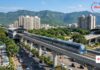
- Integration with Metro and BRTS: Faridabad is connected via the Delhi Metro Violet Line, nine new stations, and national highways linking Gurgaon, Noida, and Delhi
3- Road Infrastructure & Connectivity
Faridabad’s 1,150 km road network is maintained by MCF, PWD, and private developers, covering three zones: NIT, Old Faridabad, and Ballabhgarh. Key projects include:
- Smart Roads: Sector-dividing roads with 4-lane carriageways, improving traffic flow between Badkhal Mor Chowk and Faridabad Bypass Road
- Phase I & II Roads: 26.1 km of major roads upgraded with advanced traffic control, urban design elements, and landscaping
- National Highway Connectivity: NH-2 (Shershah Suri Marg), NH-3, NH-4, and state highways enhance intra-city and inter-city mobility
Sustainable infrastructure and urban amenities
1- Water & Sewerage Management
Faridabad Smart City has made significant strides in developing sustainable infrastructure and urban amenities to improve the quality of life for its residents. A major focus has been on water and sewerage management, where the city has implemented decentralised Sewage Treatment Plants (STPs), SCADA-enabled water line monitoring, and wastewater recycling initiatives, including the rejuvenation of Badkhal Lake. The city generates an average of 200–220 MLD of sewage daily, of which 114.4 MLD (65%) is collected and treated. The sewer network spans 638 km, covering approximately 55% of the city’s roads, while 156,307 of 224,575 assessed properties are connected to the sewer system. Stormwater drainage extends over 850 km, covering 74% of the road network, ensuring effective drainage even during the city’s average annual rainfall of 512.7 mm.
2- Solid Waste Management (SWM)
In the realm of solid waste management (SWM), Faridabad has developed a system capable of handling 1,000 tons per day, collecting waste from households, markets, industries, hospitals, and restaurants. The city relies on a combination of equipment, including tippers, refuse compactors, dumper placers, and tractors, to ensure efficient collection and disposal. The NIT zone contributes 180 TPD, while Ballabhgarh contributes 70–80 TPD, demonstrating a well-planned, zone-specific approach to waste management.
3- Smart Parks & Recreational Spaces
Faridabad has also prioritised green spaces and recreational amenities to foster healthier, more vibrant urban living. The city boasts over 600 parks, with the Smart Park initiative introducing innovative features such as amphitheatres, smart screens, smart poles, and CCTV cameras to enhance safety and engagement. Additional facilities include solar canopies, compost pits, rainwater harvesting systems, water fountains, and smart toilets equipped with sensor-based flushing, e-payment, and web-monitoring capabilities. These parks provide multi-age recreational spaces, catering to the wellness and leisure needs of all citizens.
Notable projects such as Barahi Talab, Badkhal Lake rejuvenation, and Smart Visual Identity Panels further enhance the city’s urban aesthetics, blending environmental sustainability with cultural preservation and modern urban design. These initiatives collectively reflect Faridabad Smart City’s commitment to creating a livable, safe, and sustainable urban environment for its residents.
Technology and governance: ICCC and digital integration
The Integrated Command and Control Centre (ICCC) is the backbone of Faridabad’s smart governance, integrating:
- Traffic Management System & CCTV Surveillance
- Transit Management Infrastructure
- Emergency response systems
- SCADA-enabled water, sewer, and energy monitoring
This centralised hub allows real-time monitoring, predictive analytics, and proactive urban management, improving
efficiency, safety, and citizen satisfaction.
Social and economic impact
Faridabad’s Smart City mission has transformed it into a hub for industrial growth, MSMEs, and real estate development. Key impacts include:
- Reduced traffic congestion and pollution, enhancing the quality of life
- Improved public spaces, parks, and green corridors, fostering social cohesion
- Creation of eco-friendly transport options for sustainable urban living
- Boosted residential and commercial real estate development
- Enhanced citizen engagement through digital apps and portals
Faridabad’s growth is underpinned by strategic connectivity, industrial expansion, and smart infrastructure, making it a benchmark for urban innovation in the NCR and Haryana.
Future outlook
With ongoing investments in smart mobility, eco-friendly infrastructure, and citizen-centric governance, Faridabad is poised to emerge as Haryana’s leading smart city. The city is set to become a model for sustainable urban living in India, demonstrating how innovative planning and technology can enhance the quality of life while promoting environmental responsibility. At the same time, Faridabad aims to strengthen its position as a centre of industrial, residential, and technological excellence, balancing economic growth with social well-being. By integrating its rich heritage, cutting-edge technology, and sustainable urban planning, Faridabad Smart City exemplifies how historic cities can successfully transition into future-ready, resilient, and inclusive urban ecosystems.