

The evolution of urban mobility is increasingly being shaped by collaboration between government, industry, and citizens. As cities expand and mobility needs become more complex, there is a growing recognition that transportation systems must go beyond connectivity to support livelihoods, accessibility, and inclusive growth.
A strong example of this transformation can be seen in Hyderabad, where progressive policymaking and administrative openness have enabled innovation to flourish. The city has created a supportive ecosystem where mobility platforms can operate, scale, and contribute meaningfully to addressing urban transport challenges. This approach highlights how policy stability and government support play a critical role in fostering innovation.
At the core of this shift is a broader understanding of mobility. It is no longer limited to the movement of people from one point to another but is closely linked to access to jobs, education, healthcare, and economic opportunities. Rapid urbanisation has introduced challenges such as congestion, affordability concerns, and gaps in first- and last-mile connectivity, all of which require integrated and collaborative solutions.
Technology-driven platforms are emerging as key enablers in this ecosystem. By facilitating daily commute for lakhs of users, they not only improve accessibility but also create flexible livelihood opportunities for thousands of service providers. This dual impact, enhancing mobility while supporting economic participation, underscores the growing importance of shared mobility solutions in modern cities.
A notable aspect of this model is its expansion beyond metropolitan boundaries. The presence of such services across district headquarters and smaller cities reflects a more inclusive approach to mobility, ensuring that the benefits of innovation are not limited to urban centres alone. This scalability is largely driven by a governance framework that encourages dialogue, experimentation, and balanced regulation.
Equally important is the role of continuous engagement between policymakers and industry stakeholders. Open communication and a willingness to adapt have helped shape a mobility ecosystem that is both resilient and future-ready. Such collaborative efforts position cities like Hyderabad as benchmarks for others looking to modernise their transport systems.
Building on this momentum, the path forward lies in strengthening partnerships and focusing on solutions that are accessible, efficient, and sustainable. With the right mix of policy support, technological innovation, and stakeholder collaboration, urban mobility can evolve into a system that not only moves people but also empowers communities and drives economic growth.
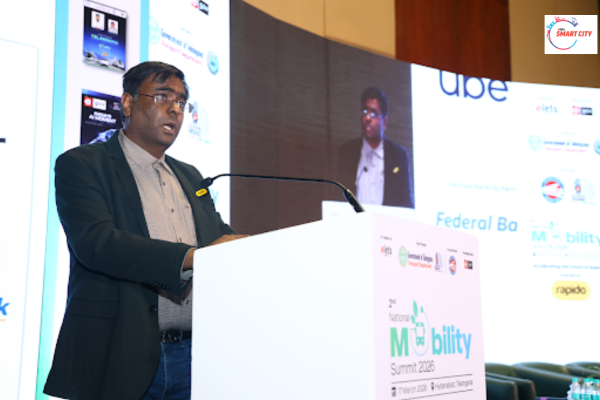
Insights shared by: Vivek Krishna, Vice President – Finance, Rapido, at the 2nd Elets National Mobility Summit held on 17 March in Hyderabad.